

 What makes the difference between a good business and a great business? There are so many good businesses out there, why do most of them level off at “good” and never transition to “great”. In our experience working with businesses and helping determine whether a brand should expand through franchising, this discussion and the dynamics of this scenario are reviewed many times over. Really, any business that is even considering franchising tends to be a “good” business. They have proven their model has some merit, their value proposition has some unique differentiation from the rest of the market and the leadership behind the brand has vision for growth and scale. Most of these businesses don’t have what it takes to franchise, but certainly would be considered good businesses by most. These factors are some of the key indicators from our perspective which delineate good from great:
- Great businesses have great systems. Generally good “systems” means overall processes, technology and duplicatable processes. A business with good systems operates using numbers and ratios and although the brand may instill emotion, the business operates with very little feeling or thought, it just functions. Evidence of great systems can be found in a business by how technology is used to manage the day to day business. Is there an online ordering system? How does the customer interact with the brand via digital mediums? What sorts of accounting and bookkeeping systems are in place and how accurate are the financial records? What about transaction and customer management technology, is there a system in place that the leadership stands behind and the employees embrace? I once met a successful investor who told me he made a mistake investing in a business one time because he found that they had great technology and state of the art systems, his mistake was not realizing that no one was using the technology. Great businesses leverage systems and use technology to make their processes consistent, customer experiences great and be able to duplicate the business model in it’s entirety.
- Great Businesses Have a Brand. “Brand” is so overused that it gets tiring to talk about and hear the word so often, but it does mean something and it does carry weight when considering what makes a business Great. Good businesses have a logo, a website, a brochure and a tagline. Great businesses have an energy that instills emotion and creates a feeling. It is a complete strategy that combines all marketing tools and strategies which unite to send a message to the customer without speaking. A great brand is often confused with something that more people know of or have heard about. In reality, a great brand could be known in a very small market and a no-so-great brand could have more exposure. To build a great brand, there needs to be time, energy and focus put into what the company stands for and understanding what is the true mission of the business. Once the brand is developed, then there needs to be execution to bring the brand to reality and build the tools that appropriately convey this brand to the consumer. What’s the power of a strong Brand? Look at Shinola – a brand developed by extremely brand-conscious and intelligent businessman Tom Kartsotis, who also is the founder of the Fossil brand. Fossil makes a watch that sells for $100 – $150, Shinola makes a watch that sells for $750-$1,000, both are technically manufactured in the same factories using many of the same parts. Shinola has created a brand that instills a feeling and passion in people which in turn gets people to pay 8-10 times more for the same product.
- Great Businesses have Great People. Having great people in an organization is positive for the obvious reasons such as more able-bodied leaders and hands on deck pushing the business forward. But what having great people also indicates is that the business and leadership are developing people and supporting the empowerment of the staff. There is a great book by John C. Maxwell called “How Successful People Lead” that references solid leaders as people who develop others and support their success as one of the stages of leadership development. This is not only a skill, but also a willingness to share intellectual property and help others which is ultimately one of the most important characteristics in determining whether a business is Great. Certainly, this plays an enormous role when considering whether to franchise a business as franchisees are the epitome of people looking for support in being developed.
Christopher Conner
Chris.Conner@FMSFranchise.com
Franchise Marketing Systems
www.FranchiseMarketingSystems.com


 My consulting firm, Franchise Marketing Systems helps businesses become franchise models. Over the past several years, I have purchased franchises as part of my work in the industry. It has been interesting to say the least to see the other side of the relationship as a franchisee. Buying a franchise can be a confusing, scary and enormously time consuming process. All of this many times leads to bad decision making as people skip steps and tend to jump into something that maybe wasn’t the best business decision to begin with. The irony of it all is that franchising is by nature a business model that helps entrepreneurs and investors avoid unnecessary risk and skip the learning curve through a proven and validated business model. The buying process provides many of the same benefits just by the simple fact that the franchise legal process requires certain disclosures and information to be presented to a franchisee prior to their making a buying decision. So what can you do in researching your franchise investment to help avoid the pitfalls of a bad investment and find the shining star of an investment you’ve been looking for?
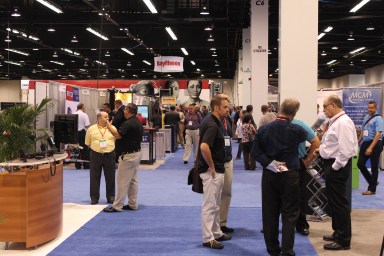 Franchise Marketing Systems will be sponsoring the September 2016 Franchise Expo held in Atlanta on 9/24 and 9/25. The Atlanta franchise show is one of the countries strongest small market shows and will be this fall’s largest franchise marketing event. The Atlanta franchise show consistently draws a large volume of franchise buyers to the event primarily from the Southeastern United States. In developing effective franchise marketing campaigns, Tradeshows have always been a key aspect to any franchise development model and in today’s technology driven marketplace maybe even more so than ever before.
 I am a small business owner, Conner and Associates, LLC, DBA Franchise Marketing Systems, based in Atlanta, GA. I fight the same fight you do every day of every week of every month. Sometimes it seems like all odds are against you being successful and you just can’t do anything right. Government regulations don’t seem to help the small business owner much, more so they favor the big corporations with money for lobbyists. Money is tough to come by as lenders look at small businesses as being higher risk in most cases. All that being said, I wouldn’t change a thing and love every minute of being a small business owner. My business, Franchise Marketing Systems has been fortunate to experience growth every year we’ve been in business. We have definitely had our set backs and trip ups along the way, but in the end, it has been exciting and is exciting to see your hard work come to fruition.
 I have spent the past 15 years working with brands who want to franchise their business and grow a brand through the franchise expansion model. Our firm, Franchise Marketing Systems works primarily with start up franchisors and brands who have not offered or sold a franchise in the past, sometimes with mid-sized or mature brands who are in need of additional support for growth. In the several hundred times that I have supported a company going through this process, there are some similar traits to the businesses that really make it in the franchise model and those that don’t.
 Businesses that turn to franchising as a way to expand their brand into new markets generally have a significant learning curve they must overcome as they learn how to manage the responsibilities of franchising and franchise expansion. A new franchisor is like a new business owner who is learning the ways, processes and steps they must take to deal with customers, overcome obstacles and effectively grow the business. What’s new about franchising to most business owners is the responsibility that comes with scaled growth and opening new locations in new markets with the addition of Franchisees in the fold. With the never-ending expansion of technology in all aspects of business and life, franchising certainly has seen it’s reliance on technology and systems increase exponentially as well. Perhaps in franchising more than most businesses, technology has taken on a new meaning as to how critical good tech is to the successful growth of a franchise.
 Franchise Marketing Systems will be exhibiting at the Dallas, TX franchise exposition on 5/14 and 5/15/2016. The Dallas franchise show is expected to be a strong showing as the Dallas market is considered to be one of the strongest in the U.S. for franchise industry growth and expansion across a variety of franchise fields. The show is put on by the National Franchise and Business Opportunities Show group who conducts 15-20 shows per year throughout the U.S. and Canada.


 If you have started a business before that has failed, you certainly know what the feeling is like. Your rent payment seems like it comes every week and your customer’s payments get smaller in amounts and longer to collect every month. When a business is at that teetering point and will either fall into oblivion or rise through it to success, it’s easy to lose your nerve as a business owner and maybe throw in the towel on your business venture entirely. Franchisees go through this learning curve when they are working in their franchise business during the first several months of operation. Many franchisees purchased a franchise due to the fact they had never operated a business before and they wanted coaching, support and guidance that can come through a franchise model, so this sense of anxiety may be at all time highs for many new franchisees during these initial months of business.
 Franchise Marketing Systems