
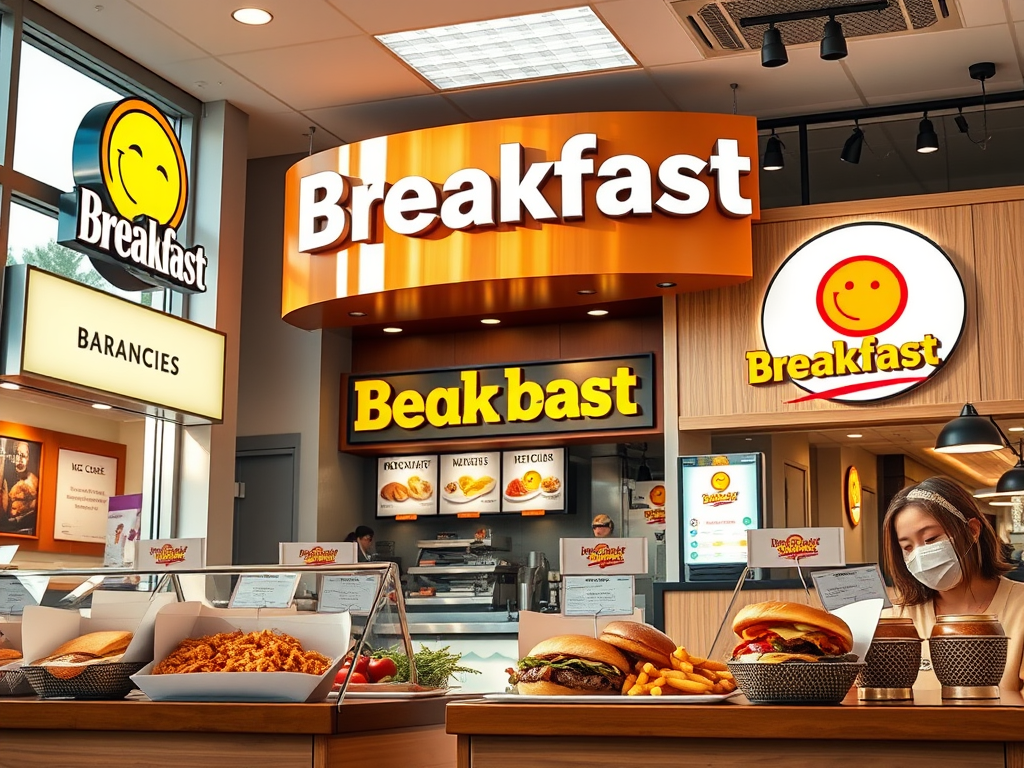
Breakfast has transformed from a sleepy daypart into one of the most lucrative battlegrounds in foodservice. For franchisors, mornings offer high-frequency traffic, beverage-driven margins, and operational models that can be simpler and smaller than lunch- or dinner-centric restaurants. For franchise buyers, the category can deliver compelling unit economics—particularly when menus revolve around coffee, baked goods, handhelds, and eggs cooked on compact lines. This article breaks down why breakfast works so well in franchising, the playbooks the best systems use, and the brands that have successfully scaled as breakfast leaders.
Why breakfast works in franchising
1) Habit and high frequency consumer trends.
Coffee and breakfast are ritualized purchases. Many guests visit the same location daily en route to work or school. Compared to dinner, where decisions are more event-driven, breakfast produces repeatable patterns that compound brand loyalty and stabilize cash flow.
2) Beverage-led margins to create ROI and Bottom Line Profits.
Espresso, drip coffee, specialty beverages, and fresh juices carry some of the highest contribution margins in foodservice. Pairing beverages with baked goods, bagels, or egg sandwiches creates attractive average checks with strong profitability.
3) Compact prototypes and speed of Service.
Breakfast-heavy concepts often run in smaller boxes with fewer hooded stations, streamlined cooklines, or even commissary-supported bake programs. Smaller footprints reduce occupancy costs and widen the set of viable real estate.
4) Labor advantages.
Simpler dayparts and limited menus can mean fewer SKUs, shorter training curves, and more predictable staffing. Some brands avoid late nights entirely, reducing labor premiums and shrink.
5) Drive-thru and digital fit.
Breakfast aligns naturally with drive-thru, curbside, order-ahead, and subscription/loyalty programs. Mornings reward throughput; technology plus smart store design converts lines into velocity.
6) Daypart expansion options.
Successful breakfast brands can layer in mid-morning snacks, bakery, and light lunch without losing identity, increasing asset utilization across the day.
Read more on the Poppin Yolk Franchise model: https://thefranchisecourier.com/popping-yolk-franchise-system-hits-the-market/
The franchising playbook for scaling breakfast
Menu discipline.
Leaders keep core menus tight (coffee + one or two signature breakfast platforms) and rely on LTOs for variety. That keeps training simple and ticket times low.
Supply chain mastery.
Centralized roasting/baking or contracted commissaries ensure consistency. SKU count stays lean; specs are ruthlessly documented in manuals and e-learning.
Prototype & real estate strategy.
Brands win by deploying multiple formats—end-cap drive-thru, in-line urban shops, kiosks, college or airport units—while maintaining identical guest experience standards. Breakfast thrives where morning traffic is highest: commuter corridors, school routes, medical hubs, and dense office parks.
Ops and training.
The best systems invest heavily in barista or grill training, speed-of-service standards (e.g., car-per-minute metrics), and equipment packages that minimize bottlenecks (dual drive-thru lanes, make-ready stations, hot-hold for baked items).
Marketing & loyalty.
Daily rituals respond to rewards. High-performing systems integrate app-based ordering, points accrual, and time-boxed offers (e.g., “before 10:30 a.m.”). Co-op marketing drives brand consistency while empowering local activation near schools, gyms, and offices.
Franchise economics.
Breakfast winners showcase clear unit-level models: realistic sales ramp, food/labor targets, and capital that matches the prototype. Many lean into multi-unit, area-development agreements to accelerate cluster growth and advertising efficiency.
Brands that scaled breakfast through franchising
Below are breakfast-led or breakfast-dominant brands that have grown significantly with franchising (or franchise-style development). Each operates a slightly different model, but they share a focus on morning demand, operational simplicity, and strong support systems.
1) Dunkin’ (U.S. & international)
A quintessential breakfast franchise story. Dunkin’ built scale on drip and espresso beverages, donuts, and breakfast sandwiches, then modernized its beverage platform and drive-thru operations. The brand’s clustering strategy—densifying markets to lower distribution and marketing costs—has long favored multi-unit developers. Dunkin’s simplified kitchens, strong loyalty program, and steady LTO cadence make it a template for beverage-led franchising.
What to learn: Tight morning menu + beverage margins + technology + market clustering = durable franchise economics.
2) Tim Hortons (Canada, U.S., global)
“Double-double” coffee culture meets baked goods and breakfast sandwiches. Tim Hortons built an enormous base of habitual morning traffic with a franchise-centric model. As it moved beyond Canada, the brand adapted real estate formats (freestanding, end-cap, nontraditional) while staying beverage-led.
What to learn: Cultural ritual is a moat; pair it with franchised expansion and localized menu tweaks.
3) IHOP (U.S. & international)
While IHOP serves all dayparts, it is synonymous with breakfast and has long leaned on franchising. Its griddle-centric kitchen is consistent across formats, and franchisor support focuses on operations, marketing, and remodeling to keep the concept current. Late-night historically added sales hours; many operators highlight breakfast-heavy weekends as profit drivers.
What to learn: A breakfast identity can anchor a broader menu, enabling franchisees to capture multiple dayparts.
4) Denny’s (U.S. & international)
Another breakfast-forward, franchise-heavy diner brand, Denny’s leveraged national marketing, value platforms, and standardized grill line design. Though not exclusively breakfast, its iconic breakfast plates and 24/7 heritage built habitual traffic and off-peak utilization.
What to learn: All-day breakfast can spread fixed costs and build brand equity—if operations stay disciplined.
5) Waffle House (U.S.)
A Southeastern icon that combines company and franchise ownership, Waffle House runs a high-throughput breakfast grill with minimal menu complexity and relentless training. The model is a masterclass in line choreography and operating rhythm.
What to learn: Operational choreography at the grill delivers speed and consistency that keeps guests loyal.
6) Another Broken Egg Cafe (U.S.)
A polished breakfast/brunch franchise with bar program, driving higher average checks than QSR peers. The brand leans on daypart focus (7 a.m.–2 p.m. style hours), culinary credibility, and relaxed ambience to attract weekend and weekday late-morning crowds, while still fitting franchising with strong training and supply chain.
What to learn: Brunch can be franchised successfully when ticket and alcohol mix offset smaller footprints and limited hours.
7) Huddle House (U.S.)
A classic diner-style, breakfast-heavy franchisor emphasizing small towns and travel corridors. The model leverages comfort-food breakfast plates and portability to nontraditional sites.
What to learn: Secondary markets can be powerful for breakfast when real estate and labor are favorable.
8) Scooter’s Coffee / BIGGBY COFFEE (U.S.)
Drive-thru-first coffee chains built for franchising. Compact lots, modular buildings, and beverage-led tickets create fast builds and attractive returns when sited correctly. Food is often grab-and-go/bakery-assisted to preserve speed.
What to learn: Single-lane or dual-lane drive-thrus, tiny boxes, and beverage-centric menus make a scalable franchising engine.
9) Einstein Bros. Bagels / Bruegger’s (U.S.)
Bagel-centric formats (mix of company and franchise/license structures over time) with strong morning demand and catering upside. Commissary baking or par-baked solutions support consistency; the bagel platform pairs naturally with coffee and office catering.
What to learn: Catering extends morning brands into mid-morning and lunch without complicating the kitchen.
10) Perkins / Black Bear Diner (U.S.)
Family-dining brands with breakfast leadership and franchising footprints. Both built equity around generous portions and comfort breakfast, adding bakery or retail elements in some cases.
What to learn: Breakfast leadership within family dining keeps traffic steady; franchising scales into suburban and highway nodes.
11) Bojangles (U.S. Southeast)
While positioned as a chicken-and-biscuits QSR, Bojangles is a breakfast powerhouse thanks to biscuits, breakfast sandwiches, and sweet tea. A franchised model with strong morning mix illustrates how a savory Southern breakfast platform can scale.
What to learn: Regional breakfast specialties (scratch biscuits) create defensible differentiation and morning loyalty.
Emerging & boutique breakfast franchises to watch
- Eggs Up Grill, Toasted Yolk Cafe, Flying Biscuit Cafe: Daytime-only brands leveraging brunch plates and neighborhood locations.
- Paris Baguette (bakery-café): Franchised bakery café with strong morning pastry/coffee and afternoon cake business.
- Kolache Factory: Breakfast pastries with portable, commuter-friendly formats—ideal for franchise operators near office/industrial corridors.
These concepts demonstrate that breakfast franchising isn’t monolithic; from craft brunch to drive-thru espresso stands, there’s room for multiple winning models if the fundamentals are tight.
Economics: what makes breakfast units hum
Throughput math.
Morning peaks are short and intense. Systems that hit car-per-minute and ticket times under three minutes thrive. Dual-make lines (espresso + sandwich) and warming strategies for bakery items protect speed.
COGS and mix.
Beverages subsidize food. Brands engineer menus to keep beverage mix high (loyalty members, seasonal drinks, add-on shots) and use limited SKUs for food. Handheld egg sandwiches, pastries, and bagels minimize waste.
Labor scheduling.
Front-loaded mornings and daytime hours reduce late-night premiums and ease recruiting. Cross-training (barista + cashier + window) increases flexibility.
Capex and box size.
Breakfast brands often build for 800–2,000 sq. ft. (drive-thru: pad sites or end-caps). Smaller boxes mean lower build costs and faster paybacks—assuming the site has strong AM traffic.
Catering and subscriptions.
Office catering (bagels, boxes of coffee) adds high-margin volume beyond the peak. Coffee subscriptions or refill programs stabilize frequency and SPH (sales per hour).
Read more on making a investment in a franchise: https://www.strategicfranchisebrokers.com/franchisees-investment-franchise-system/
Pitfalls and how strong franchisors avoid them
Missing the lunch bridge.
A pure 6–10 a.m. business can leave assets underutilized. Leaders add light lunch or mid-morning snacking without slowing the breakfast line.
Menu creep.
Too many SKUs wreck speed. Winning brands sunset low movers quickly and use LTOs with existing ingredients.
Real estate misfires.
Breakfast relies on AM access and visibility. Right-in/right-out, drive-thru stack room, school/work routes, and signage matter more than they do at dinner-led concepts.
Underpowered equipment.
Espresso machines, ovens, or refrigeration that can’t handle peak volumes cause long lines and app cancellations. Franchisors spec for peak, not average.
Training and culture gaps.
Mornings are rushed. Smiles, accuracy, and pace require discipline and management presence at opening. The best systems staff their “A team” at 6–10 a.m., not after.
Overpromising economics.
Responsible franchisors provide sober pro formas, clear ramp assumptions, and territory strategies that prevent cannibalization.
What franchisees should look for in breakfast brands
- Proof of throughput. Ask for peak hour metrics, drive-thru capacity, and average ticket by hour.
- Supply chain clarity. How are beans roasted, bagels baked, or eggs sourced? What’s the plan for new markets?
- Digital ecosystem. Loyalty penetration, order-ahead adoption, and POS reliability directly impact repeat business.
- Prototype flexibility. Can you deploy an end-cap or double drive-thru where land is tight?
- Training intensity. How long is barista/grill training? What are certification standards?
- Catering playbook. Is there a turnkey office-catering engine (menus, packaging, outreach) to fill the late morning?
- Marketing co-ops and LTO cadence. Breakfast brands live on rhythm; ensure the franchisor has a calendar that keeps traffic energized.
- Territory logic. Look for clustering and sustainable spacing that protects AM trade areas.
The outlook: mornings still have runway
Hybrid work created turbulence, but the morning habit has proved resilient—and in many suburbs, even stronger, with school-run traffic replacing some commuter patterns. Drive-thru continues to gain share; portable breakfast plus premium beverages remain a winning formula. As inflation nudges diners toward value and consistency, breakfast franchises that balance speed, treat-yourself beverages, and approachable prices will keep gaining ground.
At the same time, new players are carving niches: Asian bakery cafés with high-volume pastry lines; Latin breakfast handheld specialists; health-driven juice and bowl concepts; and tiny footprint espresso stands purpose-built for suburban arterials. Technology—from kitchen display systems to predictive ordering—will further compress ticket times and personalize offers.
Bottom line
Breakfast and franchising are natural partners. When brands respect the daypart’s physics—short peaks, beverage margins, simple menus—and pair them with tight supply chains, thoughtful real estate, and disciplined training, they can scale quickly and profitably. Whether the model is a dual-lane drive-thru coffee stand or a polished brunch café, the playbook is consistent: build ritual, protect speed, keep the menu focused, and let franchising do what it does best—replicate a strong system across the markets where mornings matter most.
For more information on how to franchise a breakfast brand, contact Franchise Marketing Systems: www.FMSFranchise.com
 Franchise Marketing Systems